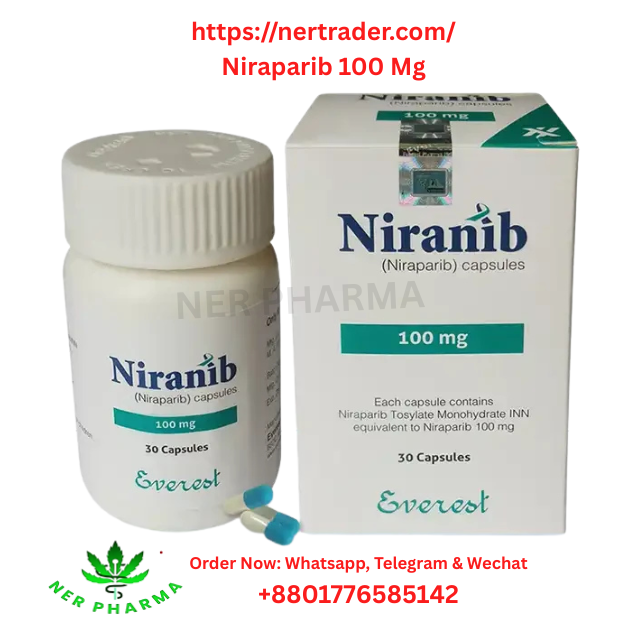
The active ingredient of the drug Niranib 100 mg is niraparib. It's an essential remedial medicine used substantially in the treatment of some cancers, specially ovarian, fallopian tube, and primary peritoneal cancer. Niranib 100 mg capsules are generally specified in a conservation authority authority following a case's response to platinum- grounded chemotherapy.
What is Niraparib and How Does it work?
Niraparib is a member of the group of medications called Poly(ADP-ribose) Polymerase (ParaP) inhibitors. To understand how it works, one has to compactly bandy mechanisms of DNA form in cells. Our bodies are exposed to nonstop damage to the DNA, and cells have intricate mechanisms for repairing this damage and maintaining genomic stability. One similar medium involves PARP enzymes, which play a pivotal part in repairing single- beachfront DNA breaks.
Cancer cells with blights in other essential DNA form pathways( e.g., homologous recombination form, which is frequently linked with mutations in BRCA1 or BRCA2 genes) come dependent on PARP- intermediated form. The reliance creates a" synthetic lethality" – a vulnerability PARP impediments like Niraparib exploit.
With Niraparib administration, it inhibits and binds to PARP- 1 and PARP- 2 enzymes. Effective single-beachfront DNA break formation is compromised as a result. In homologous recombination form-deficient cancer cells( similar as BRCA- shifted cancers), the unrepaired single- beachfront breaks are recast into further poisonous double- beachfront DNA breaks during DNA replication. Since the cancer cells warrant an active homologous recombination form pathway, they can not effectively repair these double- beachfront breaks, performing in expansive DNA damage and eventually climaxing in cancer cell death.
Additionally, Niraparib can cause "parap trapping." It is entangling the PARP-DNA complex at the site of DNA damage in addition to preventing the enzyme from exerting its activity. These trapped complexes are largely poisonous to the cells, which also contributes to the medicine's action against the cancer cells, particularly those with homologous recombination insufficiency.
Indications for Niranib (Niraparib) 100 Mg
Treatment of intermittent epithelial ovarian, fallopian tube, or primary peritoneal cancer as first- line conservation. This is in individualities with a complete or partial response to platinum- grounded chemotherapy. It's for the extension of absolution duration and avoidance of rush of the cancer.
Conservation therapy for primary peritoneal, fallopian tube, or intermittent epithelial ovarian cancer. This is for patients who have responded either fully or partially to platinum-based chemotherapy for cancer, particularly those who have a harmful or suspected harmful hereditary BRCA gene mutation.
Niraparib may also be tested in other kinds of cancer with specific inheritable mutations, like in ongoing clinical trials in metastatic castration-sensitive prostate cancer with mutations in homologous recombination form genes.
Dosage and Administration
Niraparib treatment must be tailored to each patient's unique circumstances, taking into account factors including body weight and platelet count. In general, when administered for conservation treatment, the recommended dose is 300 mg formerly daily, meaning generally three 100 mg capsules. But depending on a case's weight or platelet count, a reduction of the original dose to 200 mg formerly daily may be considered.
It is recommended that Niranib capsules be consumed whole, without being broken, crushed, masticated, or opened. In case of nausea, the drug can be given at night. It is recommended to administer the treatment at the same time each day. Treatment initiates no latterly than 8 weeks after the last platinum- containing authority and is continued as long as complaint growth or inferior toxin doesn't occur. However, cases can take the coming bone at regular time; don't double the cure if a cure is missed.
Potential Side Effects
Like all important specifics, Niraparib can beget side effects. The maturity are related to its effect on fast- growing cells, both cancer and normal like bone gist cells. Most common side effects.
Hematologic venom. This is a significant concern and includes
Increased bleeding and bruises can result from thrombocytopenia, or decreased platelet counts.
Anemia( low red blood cell count) may beget fatigue, pale complexion, and briefness of breath.
Neutropenia( low white blood cell count) Makes an existent more vulnerable to infection.
More oppressively, Niraparib can beget myelodysplastic pattern( MDS) or acute myeloid leukemia( AML), but these are less common. Regular blood tests are demanded to cover for these factors.
Gastrointestinal effects: Constipation, diarrhea, indigestion, dry mouth, loss of appetite, abdominal pain, and nausea, and puking are typical.
Fatigue and delicacy( weakness). Fatigue is reported by cases to a great degree.
Cardiovascular effects Hypertension( high blood pressure), pulsations are also reported. Systemic monitoring of blood pressure is demanded.
Neurological effects: Dizziness, headache, and wakefulness are reported.
Musculoskeletal pain: Joints, back, and muscle pain are possible.
Coughing, taste changes, rashes, sore throats, and urinary tract infections are possible additional side effects.
Report any unusual bruising or bleeding, fever, chills, signs of infection, or inordinate fatigue to your healthcare provider incontinently.
Important Considerations
Gestation and Lactation Niraparib can harm a fetus. Ladies of travail eventuality should use effective contraception during and for at least 6 months following the last cure. Breastfeeding should be discontinued before starting the treatment and for 1 month after the last dose.
Medicine relations Niraparib interacts with other medicines and can reduce their efficacity or increase side effects. All tradition andnon-prescription specifics, vitamins, supplements, and herbal remedies taken should be reported to the croaker
by the cases.
Monitoring Regular blood work( complete blood counts) and blood pressure measures are critical during Niraparib remedy in order to descry and manage possible side effects.
In some cases of ovarian, fallopian tube, and primary peritoneal malignancies, Niranib 100 mg (Niraparib) provides a valuable therapeutic choice, especially as conservation. Its value is its targeted action as a PARP asset that exploits weakness in DNA form in cancer cells. nonetheless, given its implicit side effects, including bone gist depression, strict medical supervision and patient education are necessary for safe and effective use.
 Safe Payment
 7 Days Return Policy
 100% Authentic Products


 english


